
Rooted Meadows is inspired by the Philosophies of Rudolf Steiner
-
Curious
“It is important that we discover an educational method where people learn to learn and go on learning their whole lives”
“To truly know the world, look deeply within your own being; to truly know yourself, take real interest in the world.”
-Rudolf Steiner -
Strength
“When what we introduce into the children’s world of ideas and feelings is in line with the direction of the developmental forces of a given stage of life, we strengthen the entire developing person in a way that remains a source of strength throughout that person’s life.”
-Rudolf Steiner
-
Human
"Waldorf school education is not a pedagogical system but an art- the art of awakening what is actually there within the human being."
-Rudolf Steiner
“The heart of the Waldorf method is that education is an art - it must speak to the child's experience. To educate the whole child, his heart and his will must be reached, as well as the mind.”
-Rudolf Steiner
-
Love
“Love is higher than opinion. If people love one another the most varied opinions can be reconciled - thus one of the most important tasks for humankind today and in the future is that we should learn to live together and understand one another. If this human fellowship is not achieved, all talk of development is empty."
-Rudolf Steiner
-
Meaningful
“Our highest endeavor must be to develop free human beings who are able of themselves to impart purpose and direction to their lives. The need for imagination, a sense of truth, and a feeling of responsibility—these three forces are the very nerve of education.”
-Rudolf Steiner
-
Confidence
“If a child has been able in his play to give up his whole loving being to the world around him, he will be able, in the serious tasks of later life, to devote himself with confidence and power to the service of the world.”
-Rudolf Steiner
An Education That Honors Childhood
A screen-free, experiential, whole-child approach to learning rooted in child development.
-
Waldorf education is guided by a deep understanding of how children grow and change over time.
Childhood unfolds in three meaningful stages, each spanning roughly seven years: early childhood, middle childhood, and adolescence.
In each stage, children experience the world differently, shaped by natural changes in their bodies, emotions, and ways of thinking. Rather than expecting children to learn like adults, Waldorf education meets them where they are. Each approach is tailored to meet the students in each phase of child development.
-
Experiential and kinesthetic learning are an integral part of Waldorf pedagogy, with project-based and collaborative approaches emphasized in the classroom. This approach allows students to retain the material at a much higher level.
Math, language arts, science, humanities, the arts, languages, and physical education are not simply subjects to be read about and tested. They are experienced.
Through these experiences, Waldorf students cultivate their intellectual, emotional, physical, and spiritual capacities to be individuals certain of their paths and to be of service to the world. -
Because Waldorf curriculum demands that children move up into higher-order thinking regularly, the intellectual demand is consistently challenging while still inspiring joy.
Professors who teach Waldorf graduates across many academic disciplines and across a wide range of campuses, from state universities to Ivy League schools, note that Waldorf graduates have the ability to integrate thinking; to assimilate information, as opposed to memorizing isolated facts; to be flexible, creative, and willing to take intellectual risks; and are leaders with high ethical and moral standards who take initiative and are passionate about reaching their goals.
This video discusses more about the inspirational methods and philosophies that guide our school too.
Guiding Principles
Waldorf education is built on a deep understanding of how children grow and learn. Under the guidance of AWSNA, Waldorf schools come together across North America around a shared set of guiding principles developed by Rudolf Steiner that reflect the heart of this approach.
At Rooted Meadows, these also principles help shape the life of our school from the way we care for children to how we collaborate as a faculty and engage with families. They serve as a compass for creating a school where learning is meaningful, childhood is honored, and community thrives.
-
We see human beings as spiritual, emotional, cognizant and physical in form, and all these aspects are respected, revered and designed for in our school.
Connection between these parts is considered critical for full self-realization in addition, connection to others, the earth and to Source or whatever you call the higher power(s): God, Universe, etc.
This idea is central to our approach and attitudes at Rooted Meadows.
Note: Children will be exposed to the worlds religions as part of our curriculum design. While spiritually informed, our school is not a religious schools and do not teach one, single doctrine or set of beliefs. Families from all faith backgrounds are welcome and celebrated.
-
We honor the inherent dignity and worth of every human being. Our school community (teachers, staff, board, and families) strives to create a culture rooted in respect, equity, and care. This work is not separate from education; it is part of it.
We are committed to learning, reflecting, and growing together as we seek to understand both the historical and present-day forces that shape our world.
Guided by the founding vision of Waldorf education, we believe schools can be places of healing, conscience, and hope, where children learn what it means to live with empathy, responsibility, and humanity.
-
Rooted Meadows is guided by a deep understanding of how children grow and change over time.
Childhood unfolds in three meaningful stages, each spanning roughly seven years: early childhood, middle childhood, and adolescence.
Our educational program is developed out of this understanding. Core components of the educational program include:
the student-teacher relationship
the artistic approach
working from experience to concept
working from whole to parts
use of rhythm and repetition
observation as the foundation for assessment.
In each stage, children experience the world differently, shaped by natural changes in their bodies, emotions, and ways of thinking. Rather than expecting children to learn like adults, we meets them where they are. Each approach is tailored to meet the students in each phase of child development.
By honoring each stage of development, we allow learning to unfold in a way that feels natural, meaningful, and deeply supportive. As a result, children build a strong foundation for lifelong curiosity, confidence, and purpose.
-
It is our mission to foster development in a way so that individuals are motivated to serve humanity with strength of will, depth of feeling, clarity of thought, and the ability to work with others.
It is our hope that our alumni will be a stabilizing force of connection as they:
love life and learning
feel compassionately
act purposefully in their stewardship for their families and the world.
-
At the heart of everything is relationship.
Children learn best when they feel deeply known, supported, and cared for, and lasting relationships between students and teachers create the foundation for this sense of safety and belonging.
Our teachers work thoughtfully with each child’s unique unfolding, while also tending to the life of the class and the wider school community. When these relationships grow over time, they gain depth, trust, and stability allowing children to truly flourish.
Just as important are the relationships that surround the children.
A healthy school grows from strong, respectful connections among parents, teachers, and staff. Families are invited into a collaborative, transparent partnership rooted in shared care for the children and the life of the school.
We believe that when individuals are supported in their own growth, the entire community becomes stronger, more grounded, and more whole.
-
At Rooted Meadows, our teachers bring both heart and skill to every classroom. While guided by a thoughtfully designed educational program, each teacher has the freedom to respond to the unique needs of their students, the life of the class, and the rhythm of the school community.
Our faculty works together collaboratively to develop, refine, and reflect on the program, ensuring it serves the whole school. Within this shared framework, teachers bring creativity, flexibility, and careful attention to how each child learns, allowing learning to feel alive, meaningful, and deeply connected.
-
At Rooted Meadows, the adults who guide your children: teachers, staff, and board members, approach their work with intention and self-awareness.
They engage in ongoing study, reflection, and creative practice to deepen their understanding of both themselves and the children they serve.
Through shared learning, mentoring, artistic work, and collaborative exploration, our community of educators continues to grow together. This personal and professional growth allows them to bring presence, insight, and care to every child and family, creating a school environment where learning, curiosity, and connection can truly flourish.
-
we strive to be a self-administered school. This work is strengthened by cultivating a shared anthroposophical understanding of social interaction. Faculty, staff, and the board share responsibility for guiding and leading the school in the following manner:
a) The educational program is developed by the faculty under the guidance of the pedagogical leadership of the school.
b) Administrative activities further the educational program.
c) The board works strategically to enable legal and financial health in order to realize the mission and vision of the school.Governance of the school is structured and implemented in a manner that both cultivates collaboration and is effective.
A Century of Holistic Education
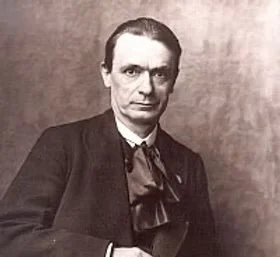
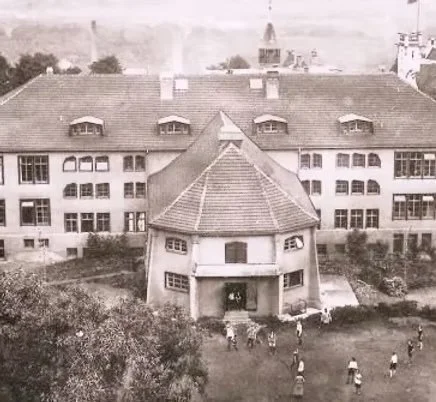
Waldorf education was born in the early 20th century through the work of Rudolf Steiner, an Austrian thinker who explored science, philosophy, biodynamic agriculture, and the nature of human development.
The first Waldorf school was a joint effort born out of a hopeful activism movement in the aftermath of WWI. In 1919, Emil Molt wanted a balanced, meaningful education for the children of his factory employees and invited Steiner to come apply his philosophies in creating a school. Unlike typical schooling of the time, it combined academics, the arts, and practical skills, honoring each child as a whole human being. The approach resonated widely, and Waldorf education spread across Europe and eventually the world. Today, there are over 1,100 Waldorf schools and more than 2,000 kindergartens globally. But no matter where the school is in the world, Steiner’s educational philosophy “is about building capacity and bringing forward what is within every human being.”
Using this philosophy as our guide our school is process or journey focused; the opposite to what many modern school systems base their existence upon- industrial idealism which is product driven and test control based. Rooted Meadows strives to develop the whole being, nurturing and connecting communities, and the respect and reverence for life, the Earth and all other beings. Our classrooms are designed to inspire wonder, creativity, and connection to self, to others, to the natural world, and to something greater. Our students learn to love learning, develop resilience, and grow into thoughtful, compassionate people.
We are thankful to base our school on these principles and methods that have withstood the test of time and that celebrate childhood, fosters community, and awakens the joy and curiosity in every learner.