
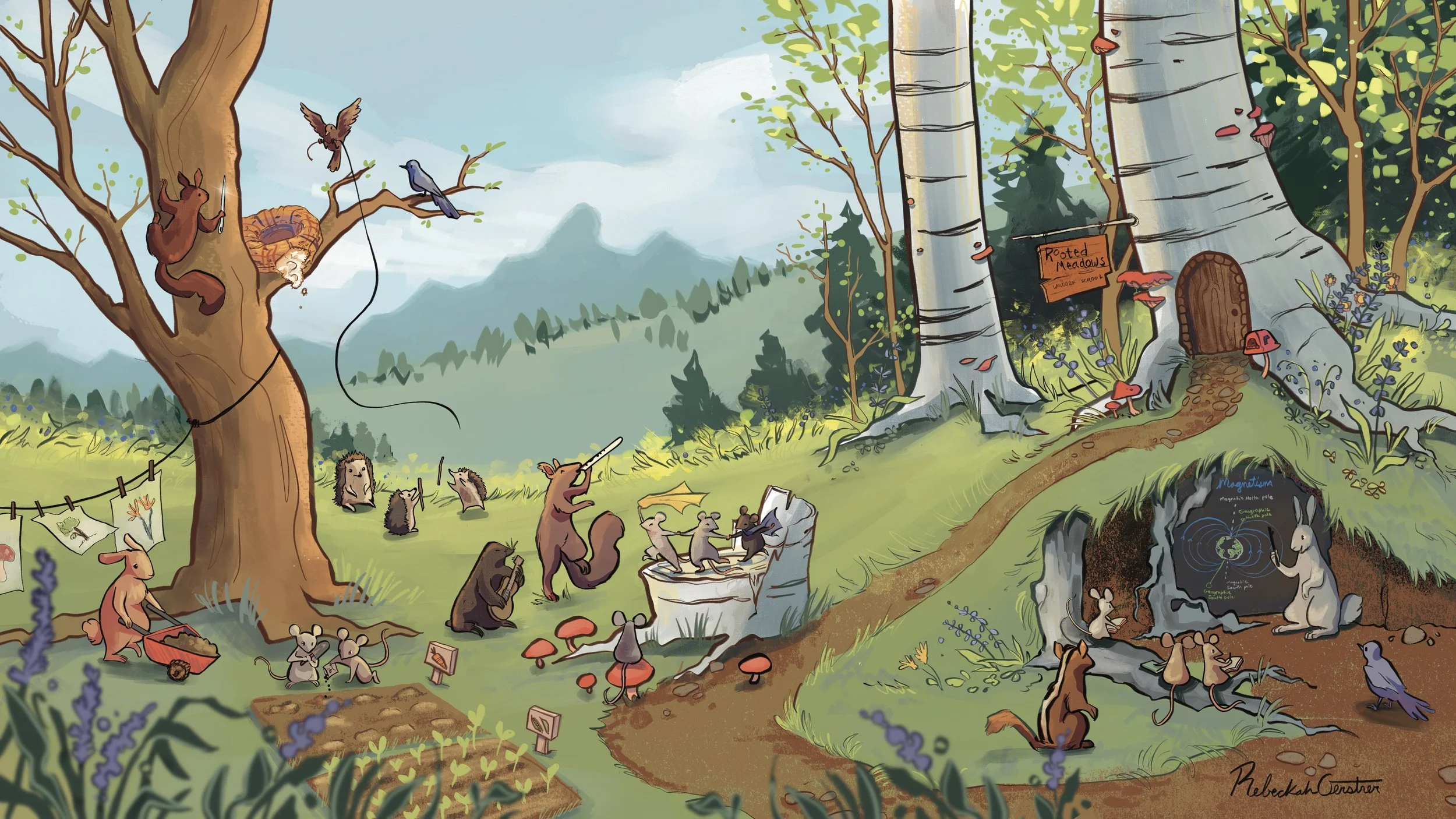
Rooted Meadows Curriculum
The Journey from Magic to Mastery
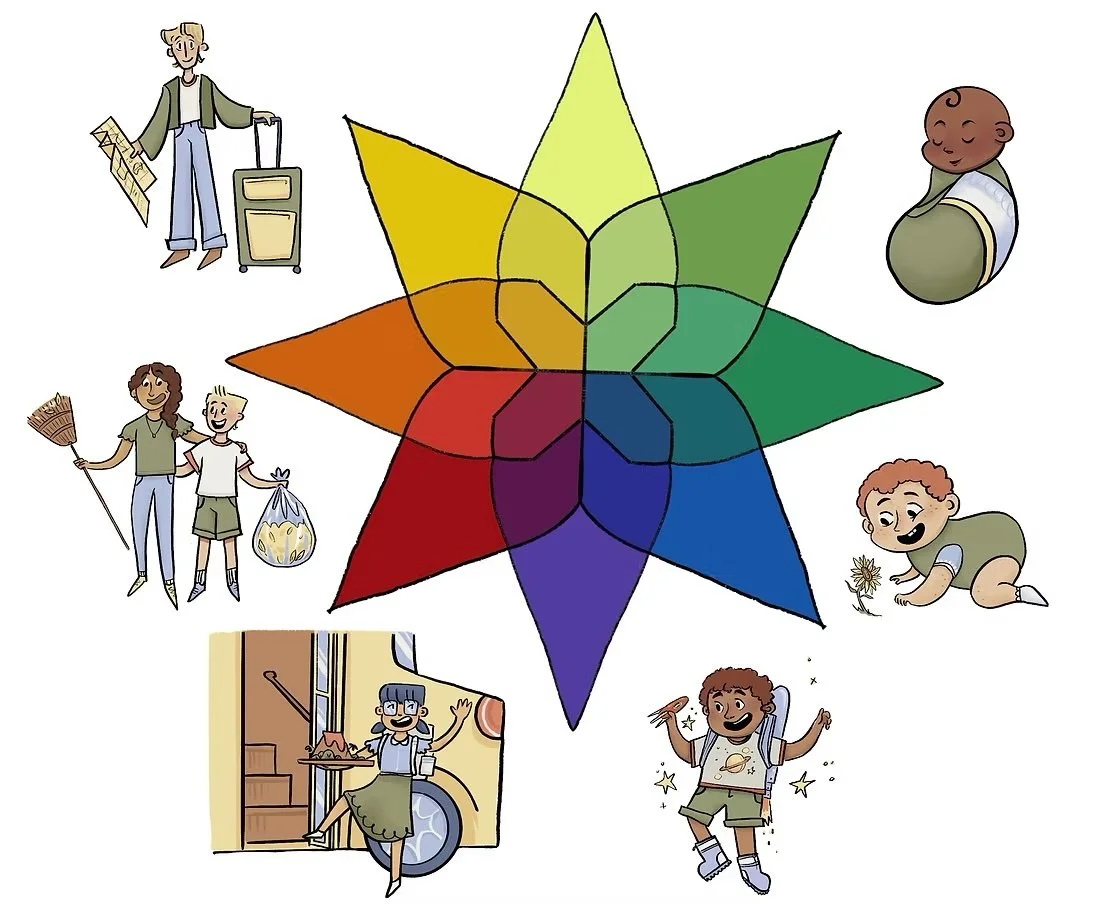
As a Waldorf-inspired school, we strive to honor the three stages of development identified by Rudolf Steiner called Early, Middle, and Late.
Each period spans approximately 7 years and coincides with various changes happening in their bodies and which part of the child’s being, according Rudolf Steiner’s three parts of a human being - soul, mind, body- is at the forefront of the child’s consciousness.
In each Season of Childhood, the order in which each of these parts of the child becomes engaged changes. Children literally see the world and process all around him/her differently than adults. It is vital for the child to taught appropriately for how he/she is developmentally ready.
Developmentally-Appropriate Curriculum
-
The order of how these children engage is Willing, then Feeling, and then Thinking.
So they are learning through doing, predominantly imitation - observing and copying. They try out a task or activity, which will create a feeling inside them, which will help them make conclusions about that activity - good, bad, do more or not, etc.
During this season, worthy role models are a priority and the environment needs to spread out a feast of rhythmic activities that promote play and discovery to the world close around them.
-
Now the child’s being has begun to change focus to the soul (the heart) where they Feel, then Will (the body), and finally Think (the mind).
The imagination has become alive and connects the child to the broadening world around them. When the child feels this connection, they are inspired to do, and then create connections and conclusions.
The arts such as drama, reciting, music, painting, drawing, modeling, along with storytelling, handwork, and movement become fully integrated in the curriculum to fully engage the child. Science and psychology have shown the power of the arts causing us to feel deeply and relate to others.
-
This is when the mind is most active; the season when thinking comes first, then feeling and doing.
The child is finding his/her place in the world and are interacting with a much larger environment. The mind is piecing it all together.
At this stage, teachers strive to allow the mind that challenge and opportunity through phenomenon based learning, discussion and debate, collaboration, community service and world stewardship, along with further exploration into the arts.
The Grades Curriculum
Building Mastery, Honoring Childhood
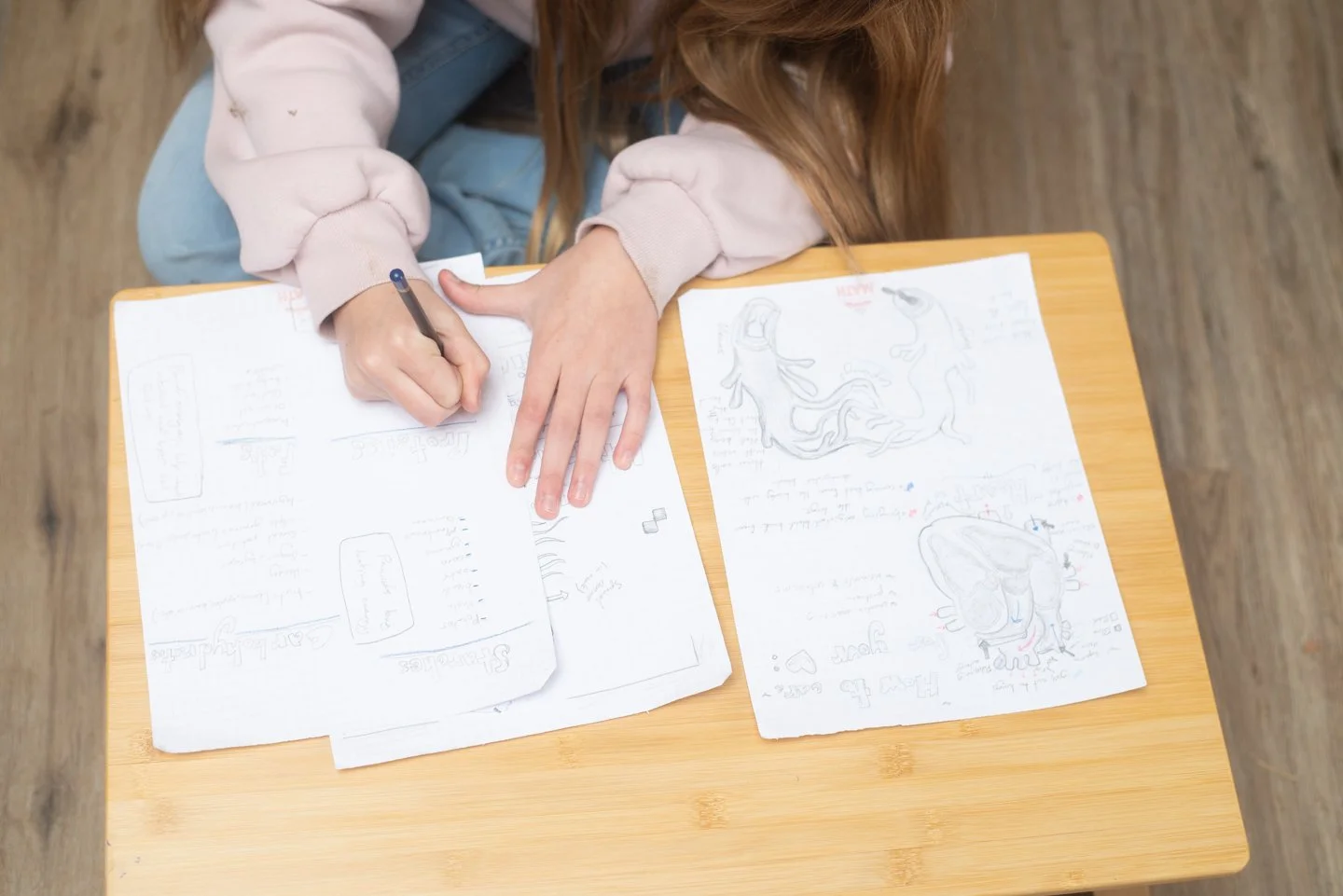
Our teachers will be trained at certified AWSNA Institutes. They thoughtfully plan and implement their developmentally appropriate lessons with the greatest of care to prepare the body, mind, and soul to receive the information given them and to engage each part of the child - body, mind, soul - in the learning process. Here you’ll find a broad overview of the main topics taught in each grade along with a few of the skills developed in the co-curricular classes.
Core subjects -Math, Language Arts, Science, Social Studies/History- are taught as mastery units meaning they deep dive into the subject and focus mastering the skills taught at that time. Each unit rotates through a block (about 4 weeks long) schedule during a daily 2-hour main lesson. Each core subject is taught twice throughout the year with reviewing during the entire year. Content from these classes are the basis for the development of the student’s main lesson books and the hands on projects for the unit.
Co-curricular classes compliment and support the core classes and help fully implement key principles to our educational approach. These classes are strengthening and balancing the subtle connections between the body, soul, and mind.
Friday BRANCH Program
Lead by Rooted Meadows Parents & Volunteers, Open to Enrolled Children & Local Home-School Families
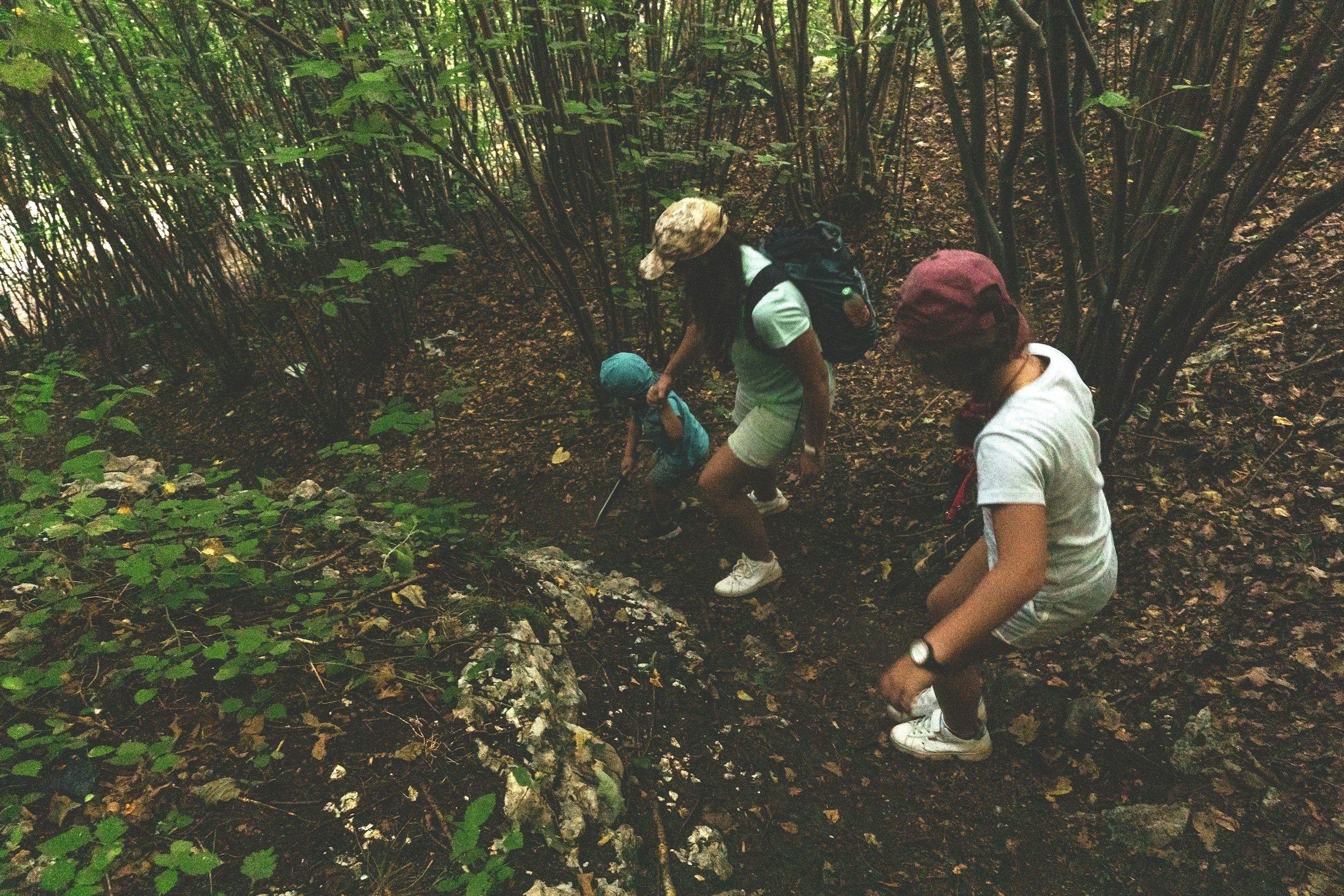
As part of our commitment to educating and developing the whole child, we recognize the importance of providing a wide range of extracurricular activities. Our BRANCH program allows our learners to try something new, have fun and pursue their interests with friends and classmates and in some classes with family members.
We regard these extracurricular classes and clubs, while optional, a vital part in the holistic development of our children. Research has time and again shown that learners’ in these settings gain an abundance of life skills - from socialization and team skills, to practical skills and executive function improvement, all the way to stress management and improved mental health.
These classes and clubs give every child the opportunity to build self-confidence by honing a talent, learning to persevere in learning something new, accomplishing challenges, and building positive relationships . The rotating variety we offer gives every child many possibilities to uncover skills and hobbies that can last a lifetime.
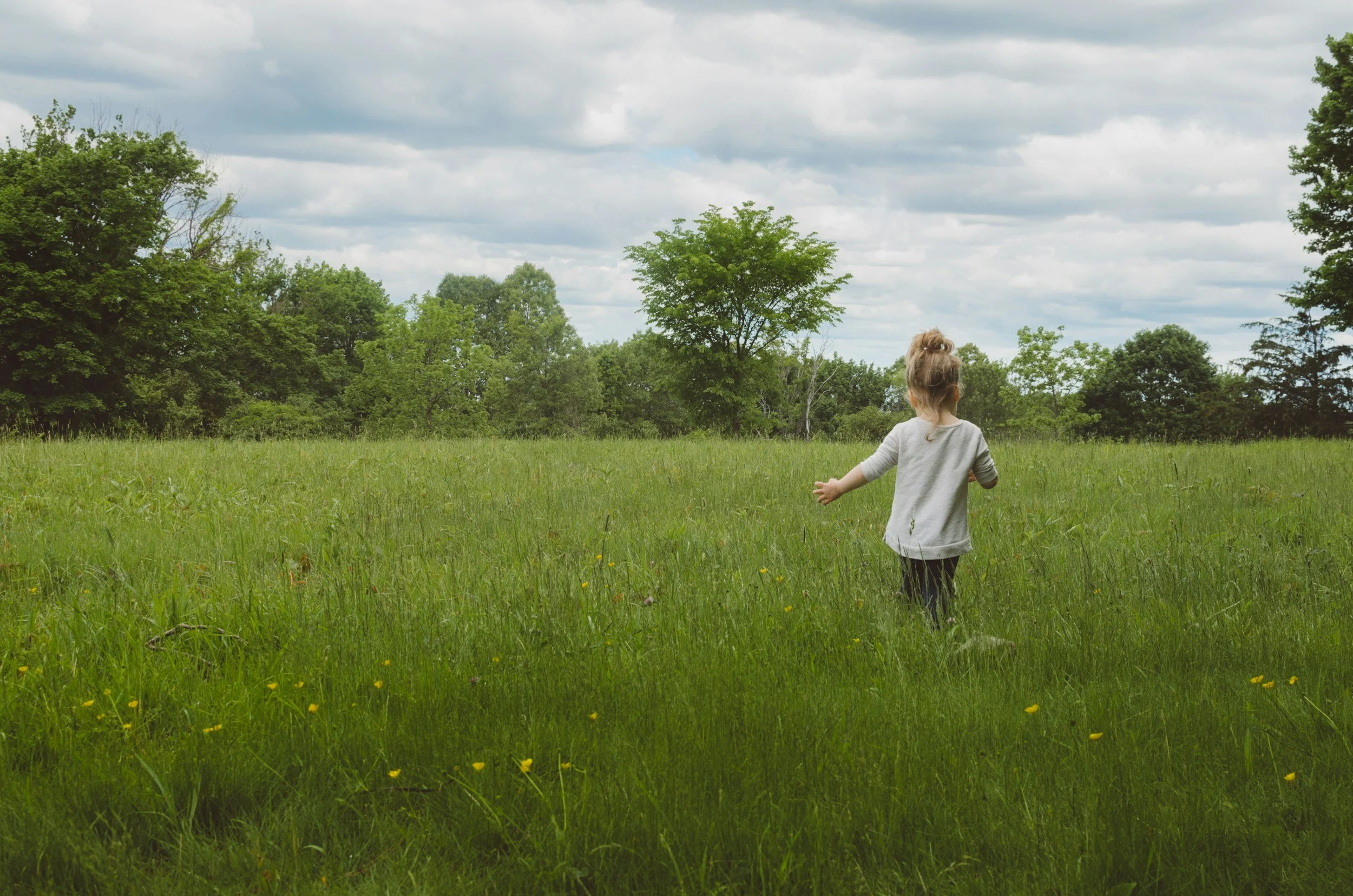
“The small child has fantasy and this is what we must engage… he sees in each thing a being like himself. He sees the stone as having a soul, he personifies everything around him. This faculty of the child is his greatest treasure, the source of all later cognition. ”
Kindergarten
Play-Based Learning When it Matters Most
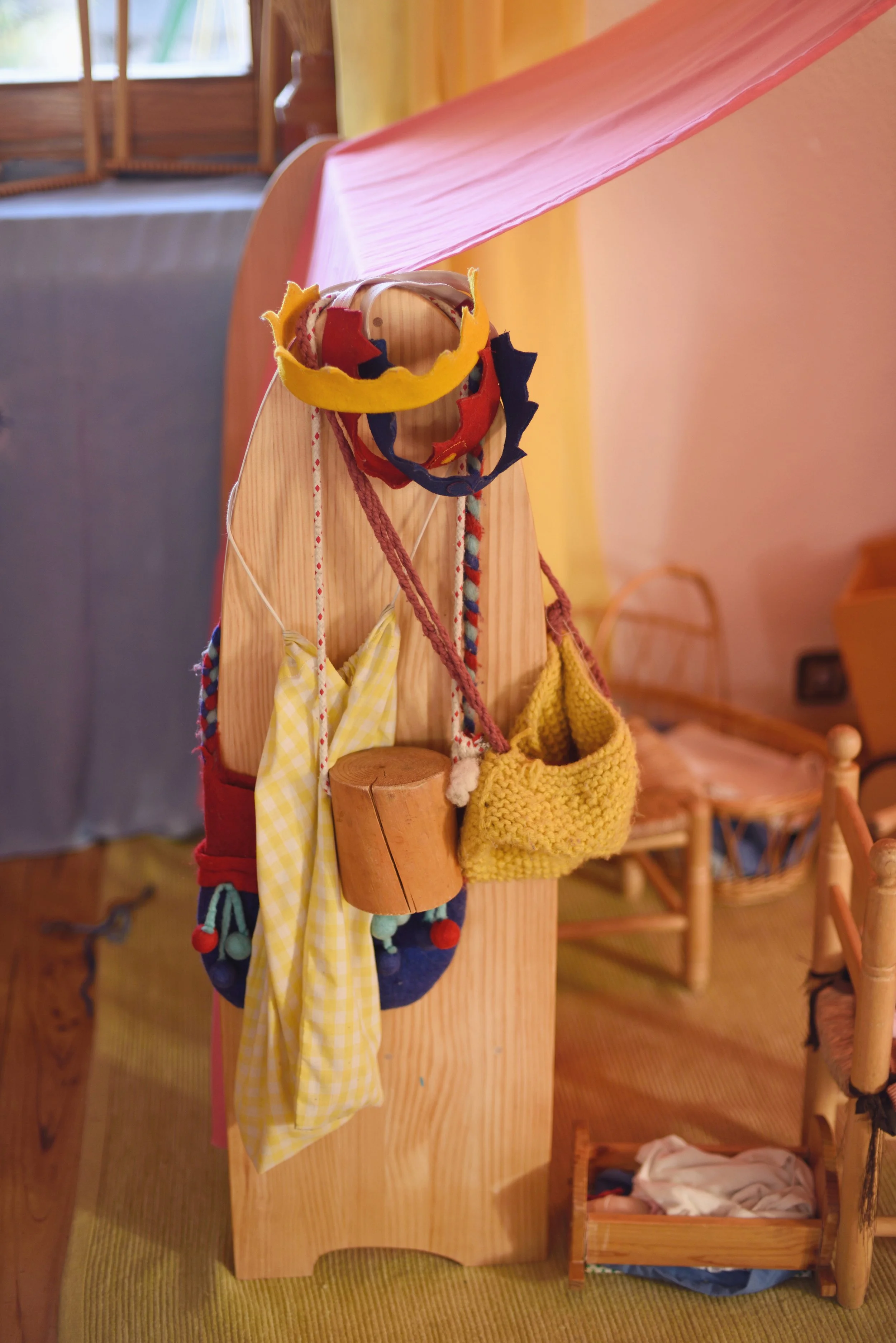
For Rooted Meadows First year of Opening 2026-2027, we are partnering with Willow Tree Preschools, a Waldorf Inspired in-home early education program, to offer a Kindergarten class. Do not fill out our Application form; contact Camila to apply for Kindergarten via her website: https://www.willowtreepreschools.com/
Following the stages of development described by Rudolf Steiner, Rooted Meadows intentionally delays formal academics until first grade because early childhood is a sacred window dedicated to an entirely different kind of critical development. During these foundational years, a child's true "work" is imaginative play, physical movement, and joyful hands-on discovery of the world around them. Learning unfolds through storytelling, song, movement, artistic activities, and time outdoors, rather than through formal academics, which are introduced in first grade. Through these experiences, children strengthen pre-academic skills: physical coordination, language, social skills, character, and emotional resilience.
Instead of abstract worksheets, the kindergarten environment focuses on practical life skills, meaningful daily habits, moral foundations, and character development. Children learn organically by discovering the world around them and imitating the purposeful, grounded actions of the adults in their environment. A predictable daily and seasonal rhythm provides a sense of security and belonging. Each day we strive to engage the whole child - mind, body, and soul in the intentional and dynamic activities and lessons presented to the children. Teachers guide with warmth and intention, modeling care, creativity, and respect. Children’s growth is supported through ongoing observation, with parent-teacher conferences offering space for thoughtful dialogue and partnership around each child’s development.
By protecting this stage of growth and prioritizing the development of the physical body, we ensure our students enter first grade they do so with curiosity, resilience, confidence, and a genuine eagerness to learn.Families consistently find that this strong foundation serves their children well for years to come: academically, creatively, and socially.that when formal academics do begin, children step into the classroom with a robust sense of security, vibrant imaginations, and a genuine eagerness to learn.
Rhythm of the Day
-
We begin the school with an “out breath” activity outdoors to prepare the child for their focused indoor work.
-
Indoor morning activity typically focuses on seasonal themes.
-
Circle time is full of movement, stories, and songs. These all compliment the Main lesson.
Main lesson is focused on teaching skills and completing guided projects. -
Children help prepare and clean up the group snack, developing healthy and good habits.
-
Indoor or outdoor imaginative free play.
Activities & Skill Development
-
Gross motor skills, resilience, frustration tolerance, value of staying with the group, and fresh air.
-
Frustration tolerance, grading, fine-motor skills, pre-writing skills, hand strengthening, creativity, and brain-hand synchronization.
-
Language skills, crossing mid-line as a pre-literacy skills, sustained attention
-
social skills, turn-taking, sustained attention, empathy, respect, frustration tolerance
-
Creating & Inventing: Highest cognitive demand (Blooms Taxonomy).
Social Skils
Attention Span Expansion